Property tax
Property taxes
There are multiple ways to compare property tax rates across states, as seen in the following tables.
| New York | U.S. | Rank (of 51) 1 is highest |
|
|---|---|---|---|
| Per capita property tax | $3,454 | $2,025 | 3 |
| Property tax percentage of personal income | 4.2% | 2.9% | 16 |
| Total property tax as percentage of state-local revenue | 16.2% | 14.8% | 4 |
Source: U.S. Census Bureau State and Local Government Finances Datasets and Tables for 2023 as presented by the Lincoln Institute of Land Policy.
| New York | U.S. | Rank (of 51) 1 is highest |
|
|---|---|---|---|
| Average property value | $619,814 | $479,775 | 8 |
| Average yearly real estate tax amount | $7,659 | $4,334 | 2 |
| Taxes per $1,000 of value | $12.36 | $9.03 | 11 |
Source: American Community Survey (ACS) 1-Year Estimates Public Use Microdata Sample (2024).
Property taxes fund local programs and services
Property taxes in New York State support school districts, local governments, special districts (such as fire districts), and other local services.
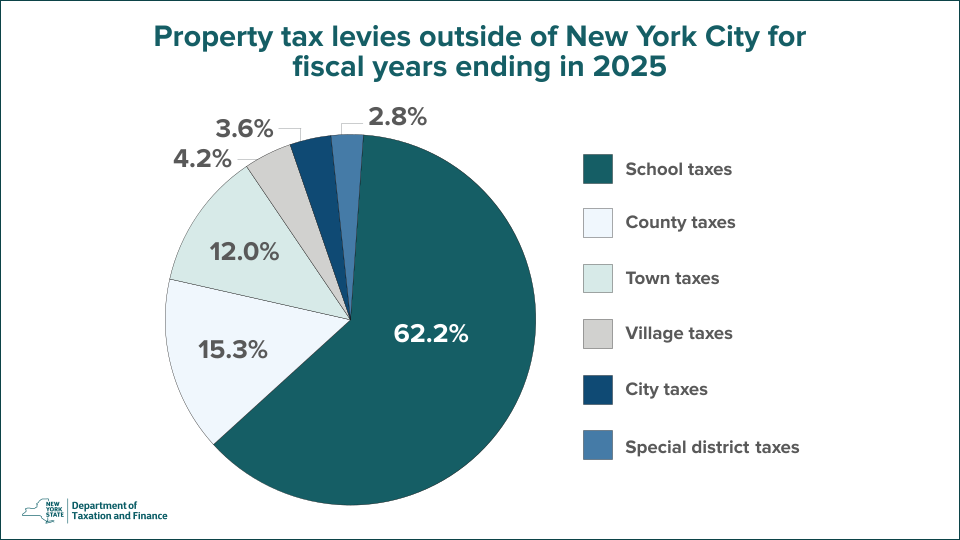
This pie chart shows the proportion of various types of property tax levies in New York State outside New York City for fiscal years ending in 2025.
Property tax levies outside of New York City for fiscal years ending in 2025
View this data as a table
| School taxes | County taxes | Town taxes | Village taxes | City taxes | Special district taxes |
|---|---|---|---|---|---|
| 62.2% | 15.3% | 12.0% | 4.2% | 3.6% | 2.8% |
Working with local government
New York State does not receive any revenue from the property tax, but the Tax Department's Office of Real Property Tax Services (ORPTS) supports the more than 1,000 local governments that do.
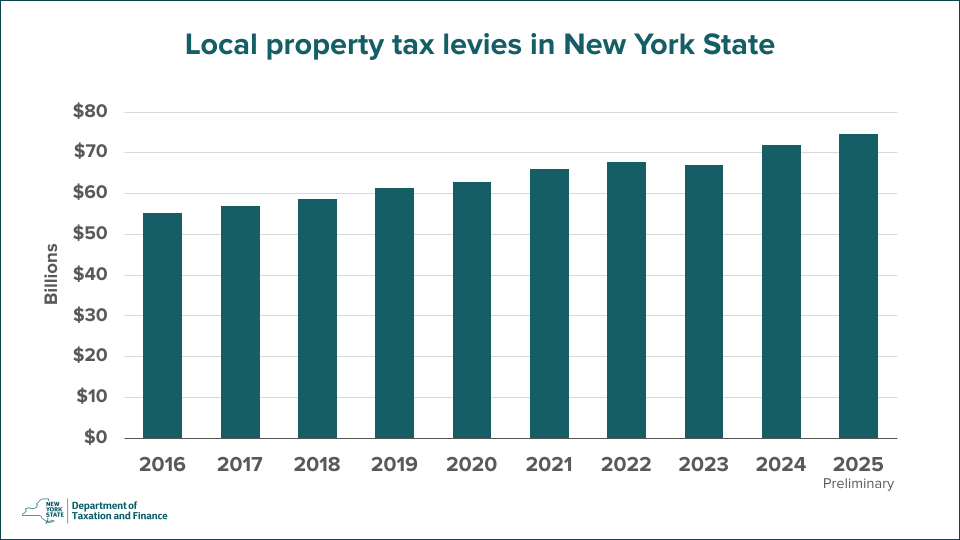
This bar chart shows local property tax levy amounts in New York State from 2016 to the preliminary 2025 amount. For exact numbers, see the data table.
Local property tax levies in New York State
View this data as a table
| Fiscal years ending in | 2016 | 2017 | 2018 | 2019 | 2020 | 2021 | 2022 | 2023 | 2024 | 2025 preliminary |
|---|---|---|---|---|---|---|---|---|---|---|
| Property tax levies (in billions) |
$55.15 | $56.85 | $58.79 | $61.28 | $62.85 | $65.95 | $67.80 | $67.13 | $71.86 | $74.54 |
Types of properties in New York State
There are more than four million residential properties in New York State, and there is small but steady growth each year. The residential category includes one, two, and three-family homes, as well as manufactured homes and seasonal residences. Apartment buildings are included in the commercial category. For details, see Property type classification codes.
| Calendar year | 2019 | 2020 | 2021 | 2022 | 2023 | 2024 | 2025 |
|---|---|---|---|---|---|---|---|
| Number of residential properties | 4,000,105 | 4,006,163 | 4,013,060 | 4,021,536 | 4,032,628 | 4,039,868 | 4,047,674 |
| Annual growth | 0.15% | 0.17% | 0.21% | 0.28% | 0.18% | 0.19% |
More than two-thirds of all New York properties—and more than 80% of property sales—are residential; however, residential properties make up only 31.2% of the total acreage.
Agriculture properties account for 17.2% of property acreage but are only 1.3% of all properties and 1.2% of sales.
The property class category of wild forested lands, conservation lands, and public parks accounts for the next largest share of acreage (24.9%) but only make up 1% of the number of properties and .3% of sales. However, vacant land combined with wild forested, conservation, and public park lands covers 44.4% of New York acreage, but only make up 12.4% of the number of properties and 10.4% of sales.
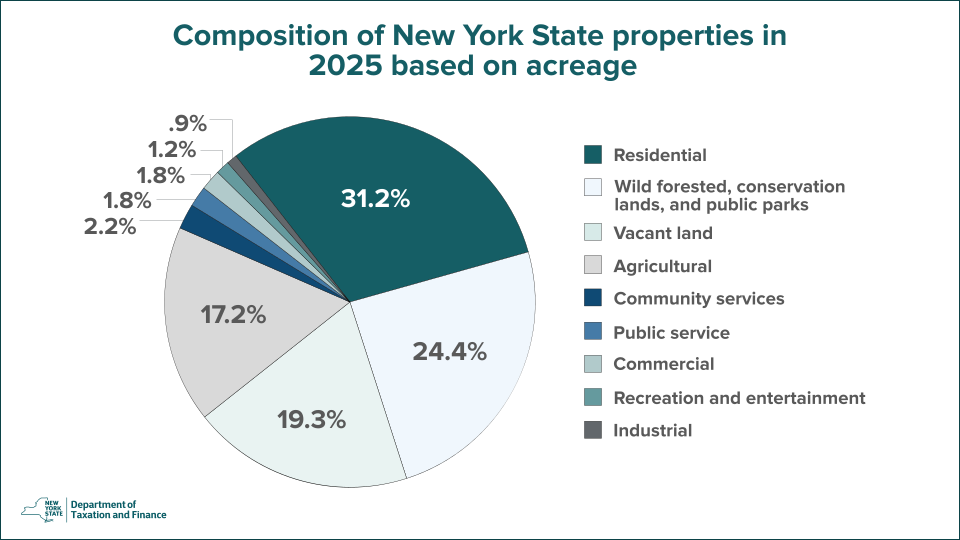
This pie chart shows the proportion of New York State properties by property class category based on acreage. For exact numbers, see the data table.
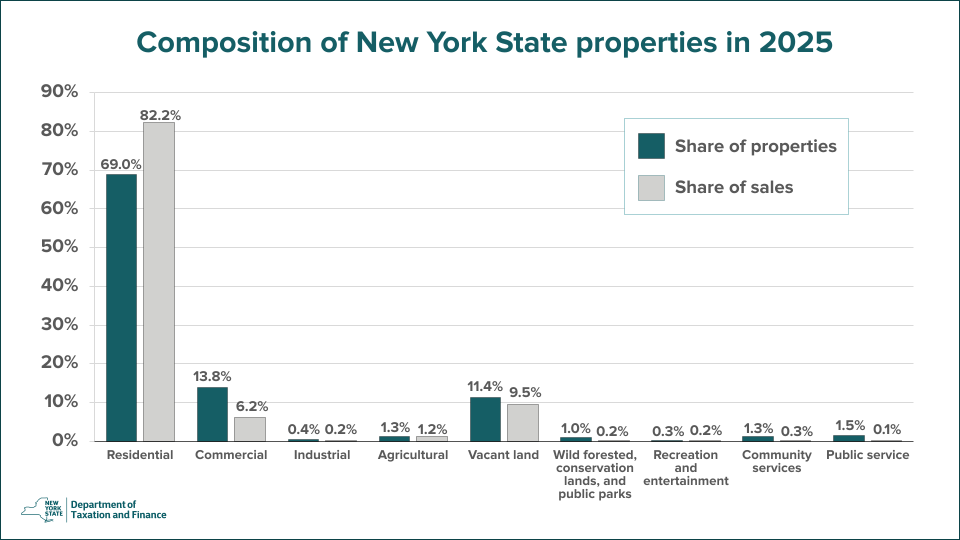
This bar chart shows the proportion of New York State properties by property class category based on the number of properties and the number of sales. For exact numbers, see the data table.
Composition of New York State properties in 2025
View this data as a table
| Property class category code | Property class category | Number of properties | Number of sales | Acreage | Share of properties | Share of sales | Share of acreage |
|---|---|---|---|---|---|---|---|
| 200 | Residential | 4,047,674 | 163,711 | 9,458,697 | 69.0% | 82.2% | 31.2% |
| 400 | Commercial | 809,624 | 12,330 | 546,161 | 13.8% | 6.2% | 1.8% |
| 700 | Industrial | 25,750 | 368 | 263,938 | 0.4% | 0.2% | 0.9% |
| 100 | Agricultural | 78,768 | 2,466 | 5,195,020 | 1.3% | 1.2% | 17.2% |
| 300 | Vacant land | 666,237 | 18,833 | 5,844,364 | 11.4% | 9.5% | 19.3% |
| 900 | Wild forested, conservation lands, and public parks | 56,623 | 463 | 7,397,824 | 1.0% | 0.2% | 24.4% |
| 500 | Recreation and entertainment | 17,985 | 303 | 364,205 | 0.3% | 0.2% | 1.2% |
| 600 | Community services | 74,615 | 501 | 663,561 | 1.3% | 0.3% | 2.2% |
| 800 | Public service | 85,970 | 121 | 534,222 | 1.5% | 0.1% | 1.8% |
| Total | 5,863,246 | 199,096 | 30,267,992 | 100.0% | 100.0% | 100.0% | |
STAR benefits
More than 2.7 million New Yorkers received School Tax Relief (STAR) benefits in 2025 in the form of either a property tax exemption or a credit.
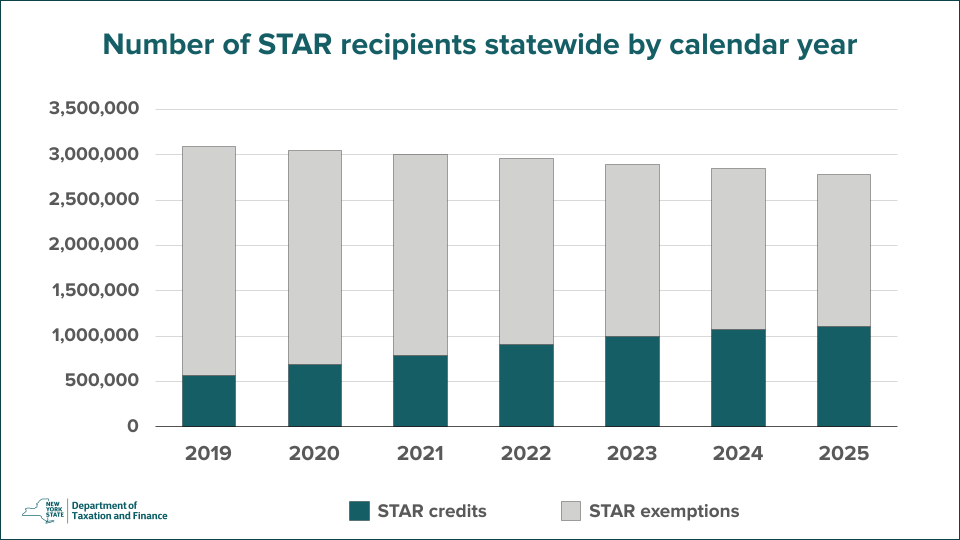
This stacked bar chart shows STAR credit recipients and STAR exemption recipients and indicates the total number of STAR recipients in New York for calendar years 2019 through 2025. For exact numbers, see the data table.
Number of STAR recipients statewide by calendar year
View this data as a table
| Calendar year | 2019 | 2020 | 2021 | 2022 | 2023 | 2024 | 2025 |
|---|---|---|---|---|---|---|---|
| STAR exemption recipients | 2,522,851 | 2,362,245 | 2,218,762 | 2,051,601 | 1,896,093 | 1,777,391 | 1,668,442 |
| STAR credit recipients | 567,017 | 689,008 | 786,139 | 908,612 | 1,000,715 | 1,072,402 | 1,110,541 |
| Total recipients | 3,089,868 | 3,051,253 | 3,004,901 | 2,960,213 | 2,896,808 | 2,849,793 | 2,778,984 |
Senior citizens with incomes of $107,300 or less were eligible for Enhanced STAR benefits in calendar year 2025. The number and proportion receiving the enhanced benefit increased noticeably over the last five years.
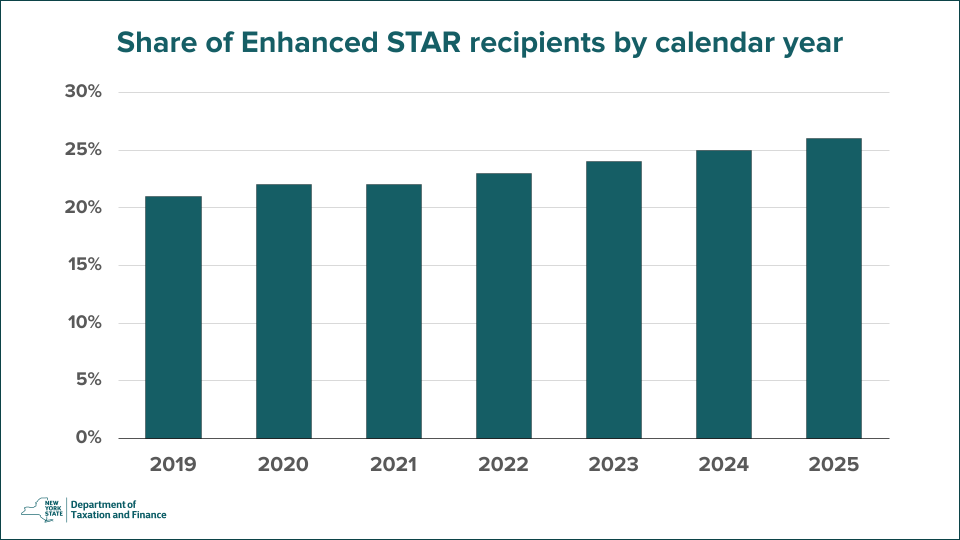
This bar chart shows the percentage of New York STAR recipients receiving enhanced STAR benefits in calendar years 2019 through 2025. For exact numbers, see the data table.
Share of enhanced STAR recipients by calendar year
View this data as a table
The STAR program returned more than $2.1 billion to property owners in 2025.
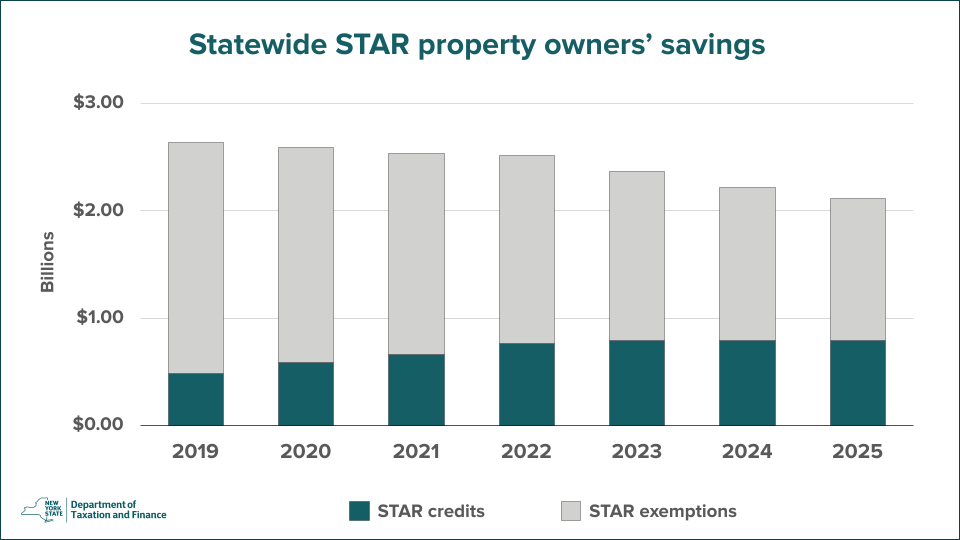
This stacked bar chart shows the amount New York property owners' savings from receiving STAR credits and STAR exemptions and indicates the total savings from the combined STAR benefits in calendar years 2019 through 2025. For exact numbers, see the data table.
Statewide STAR property owners’ savings
View this data as a table
| Calendar year | 2019 | 2020 | 2021 | 2022 | 2023 | 2024 | 2025 |
|---|---|---|---|---|---|---|---|
| STAR exemption savings | $2,156,998,213 | $2,009,915,531 | $1,876,238,408 | $1,751,414,584 | $1,580,384,501 | $1,427,551,498 | $1,324,454,207 |
| STAR credit savings | $480,094,533 | $581,240,890 | $662,302,515 | $762,647,173 | $787,090,643 | $790,138,731 | $790,766,317 |
| Total | $2,637,092,747 | $2,591,156,421 | $2,538,540,923 | $2,514,061,756 | $2,367,475,144 | $2,217,690,229 | $2,115,220,524 |