Migration
Taxpayers changed addresses to out-of-state locations
Address updates are a combination of information received from taxpayers directly and information from the United States Postal Service (USPS) National Change of Address program. Some New York State resident taxpayers change their addresses to out-of-state locations each year. The tables and charts below track the cumulative number of out-of-state transitions observed throughout the years.
In 2020 and 2021, there were noticeable increases in address changes with the start of the COVID-19 pandemic. Address changes in the subsequent years remained high but have trended back towards pre-pandemic levels.
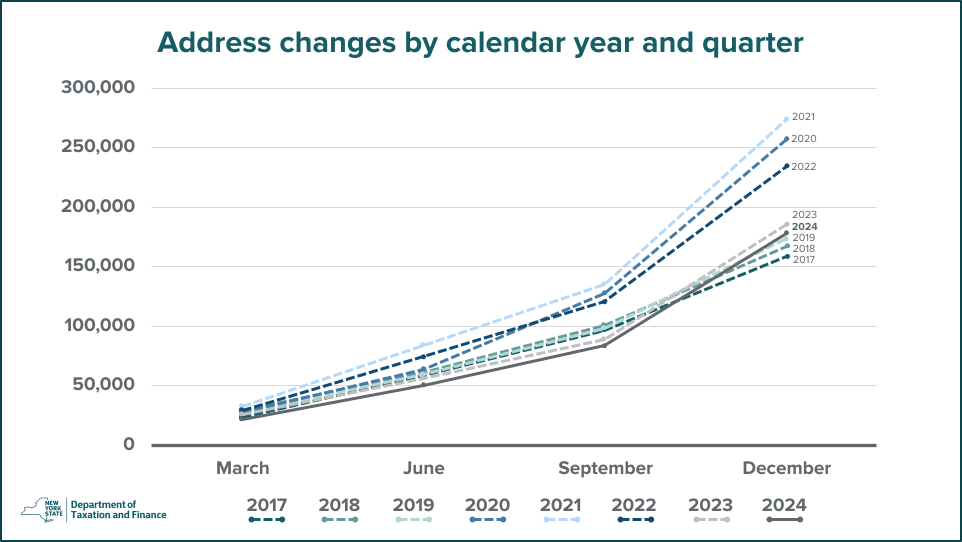
This line graph shows cumulative quarterly address changes for calendar years 2017 through 2024.
Address changes by calendar year and quarter
View this data as a table
| Month and year | 2017 | 2018 | 2019 | 2020 | 2021 | 2022 | 2023 | 2024 |
|---|---|---|---|---|---|---|---|---|
| March | 23,279 | 29,011 | 27,845 | 27,672 | 32,959 | 29,523 | 25,885 | 21,844 |
| June | 58,311 | 60,935 | 59,649 | 63,980 | 84,143 | 74,475 | 56,469 | 50,702 |
| September | 96,741 | 100,533 | 98,381 | 127,835 | 135,118 | 120,921 | 89,163 | 83,813 |
| December | 158,852 | 167,083 | 173,731 | 257,337 | 273,584 | 235,008 | 188,089 | 178,113 |
The number of tax returns fluctuates year to year creating variation in the number of address changes; proportions adjust for the different number of tax returns each year. Pre-pandemic, approximately 2% of addresses updated to out of the state each year. The rate accelerated to 3% in 2020 and 2021. It declined in 2022 and 2023 and is down to 2% in 2024.
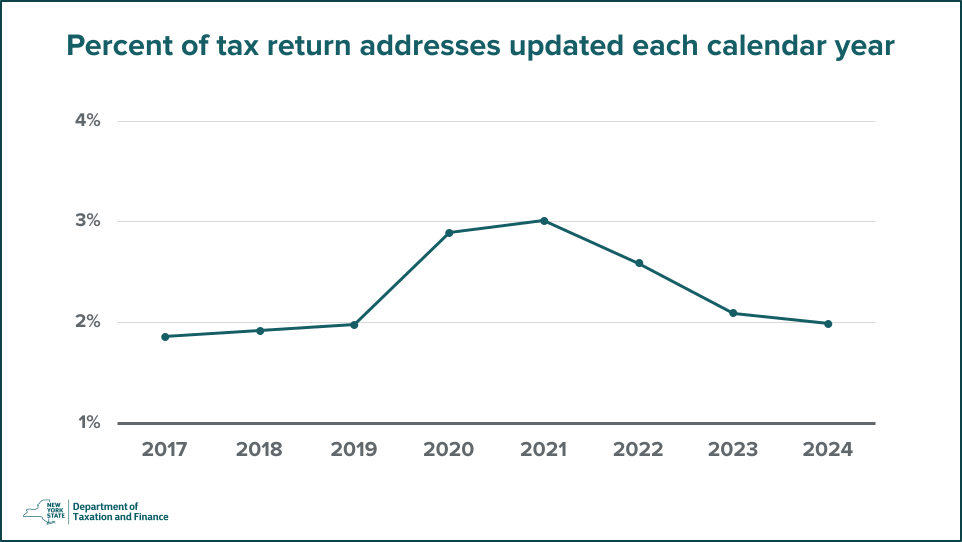
This line graph shows the percentage of tax returns with address updates for calendar years 2017 through 2024.
Percent of tax return addresses updated each calendar year
View this data as a table
| Calendar year | Percentage |
|---|---|
| 2017 | 1.86% |
| 2018 | 1.92% |
| 2019 | 1.98% |
| 2020 | 2.89% |
| 2021 | 3.01% |
| 2022 | 2.60% |
| 2023 | 2.12% |
| 2024 | 1.99% |
Millionaires changed addresses
Tax filings combined with the change of address information discussed above allow a focus on high-income taxpayers. Tax returns with a New York State adjusted gross income (AGI) of one million dollars or more are of particular interest due to the progressivity of the tax system. The pattern for millionaires resembles that of all tax returns. Address changes to other states peaked in 2020 and slowly declined each subsequent year.
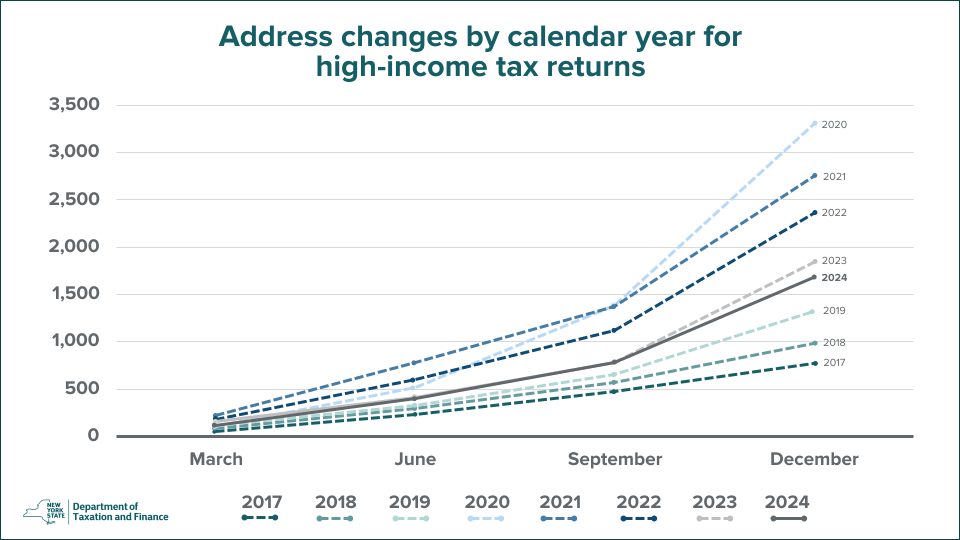
This line graph shows quarterly address changes for taxpayers claiming at least $1 million adjusted gross income in calendar years 2017 through 2024.
Address changes by calendar year and quarter for high-income tax returns
View this data as a table
| Month and year | 2017 | 2018 | 2019 | 2020 | 2021 | 2022 | 2023 | 2024 |
|---|---|---|---|---|---|---|---|---|
| March | 51 | 82 | 113 | 108 | 217 | 183 | 157 | 121 |
| June | 237 | 294 | 328 | 519 | 781 | 607 | 417 | 400 |
| September | 480 | 569 | 658 | 1,385 | 1,374 | 1,122 | 780 | 781 |
| December | 772 | 979 | 1,326 | 3,303 | 2,744 | 2,366 | 1,880 | 1,679 |
The rate of out-of-state address changes is higher for millionaires than other taxpayers. Their rate peaked above 6% in 2020 and was 2.5% in 2024. While still relatively high, it is approaching the rate for earlier years, as well as that for taxpayers overall.
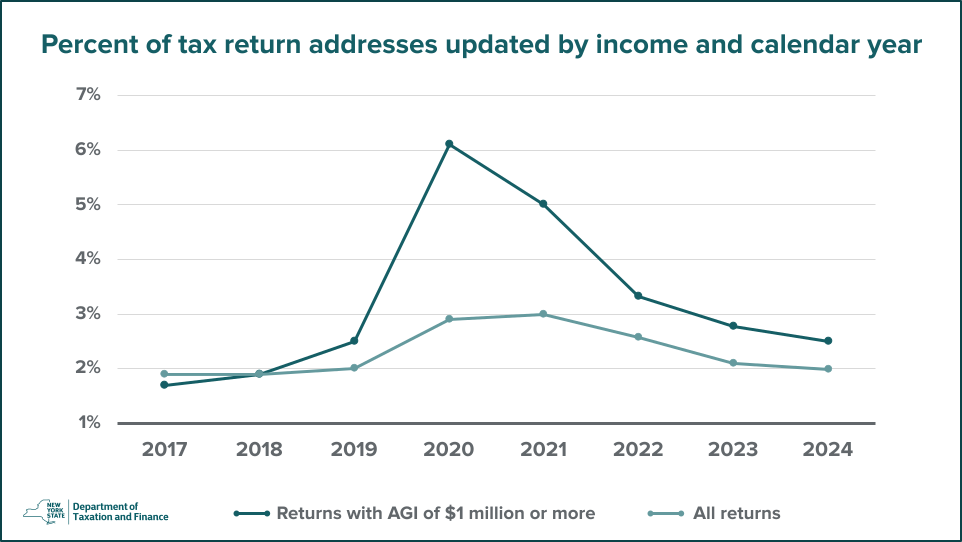
This line graph shows the percentage of address updates on tax returns each calendar year by all taxpayers and as well as by taxpayers with at least $1 million adjusted gross income by calendar years 2017 through 2024.
Percent of tax return addresses updated by income and calendar year
View this data as a table
| Calendar year | Returns with AGI of $1 million or more | All returns |
|---|---|---|
| 2017 | 1.71% | 1.86% |
| 2018 | 1.95% | 1.92% |
| 2019 | 2.48% | 1.98% |
| 2020 | 6.09% | 2.89% |
| 2021 | 5.10% | 3.01% |
| 2022 | 3.36% | 2.60% |
| 2023 | 2.85% | 2.12% |
| 2024 | 2.49% | 1.99% |
Almost 1,700 millionaires changed their address to another state over the course of 2024. This is an improvement relative to the peak above 3,300 in 2020. The number is small relative to the total number of millionaires and yet smaller relative to total number of taxpayers. However, the resulting loss of tax dollars can be significant due to the concentration of tax liability.
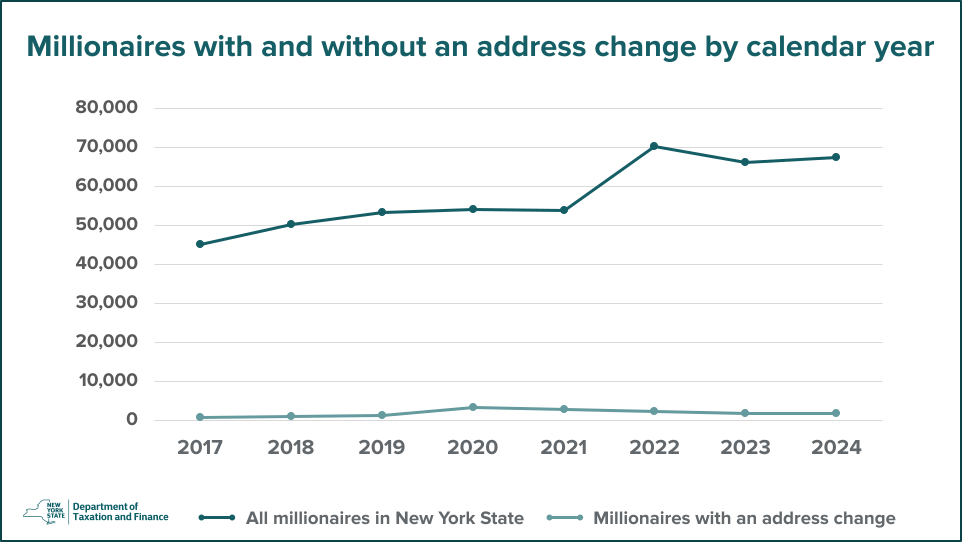
This line graph shows both the number of tax returns of millionaires moving out of New York and the number of tax returns of millionaires remaining in New York by calendar years 2017 through 2024.
Millionaires with and without an address change by calendar year
View this data as a table
| Calendar year | All millionaires in New York State | Millionaires with no address change | Millionaires with an address change |
|---|---|---|---|
| 2017 | 45,141 | 44,369 | 772 |
| 2018 | 50,255 | 49,276 | 979 |
| 2019 | 53,443 | 52,117 | 1,326 |
| 2020 | 54,219 | 50,916 | 3,303 |
| 2021 | 53,826 | 51,082 | 2,744 |
| 2022 | 70,380 | 68,014 | 2,366 |
| 2023 | 65,902 | 64,022 | 1,880 |
| 2024 | 67,418 | 65,739 | 1,679 |
Address changes out of New York State of millionaires are approaching pre-COVID-19 rates. The number of the wealthiest millionaires (those with incomes greater than $25 million) moving out of the state had the largest percentage increase and the largest recovery.
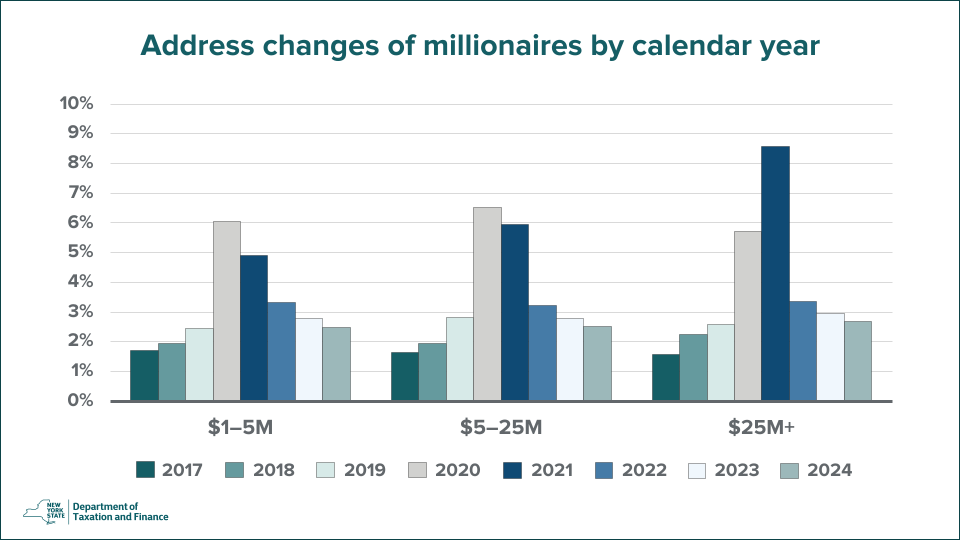
This bar chart shows the number of address changes out of New York for millionaires at various levels of income by calendar years 2017 through 2024.
Address changes of millionaires by calendar year
View this data as a table
| Calendar year | $1-5M AGI | $5–25M AGI | $25M+ AGI |
|---|---|---|---|
| 2017 | 1.72% | 1.64% | 1.58% |
| 2018 | 1.94% | 1.95% | 2.24% |
| 2019 | 2.44% | 2.81% | 2.59% |
| 2020 | 6.04% | 6.53% | 5.71% |
| 2021 | 4.91% | 5.95% | 8.57% |
| 2022 | 3.38% | 3.27% | 3.37% |
| 2023 | 2.85% | 2.84% | 3.15% |
| 2024 | 2.49% | 2.51% | 2.67% |
IRS state-to-state migration tally of tax returns
The Internal Revenue Service (IRS) tracks migration using personal income tax returns matched across adjacent years. New York has a long history of population outflow and inflow. The following section reflects the 2022–2023 IRS data. While the level of outflow remains historically high, the net improved relative to the 2021–2022 data.
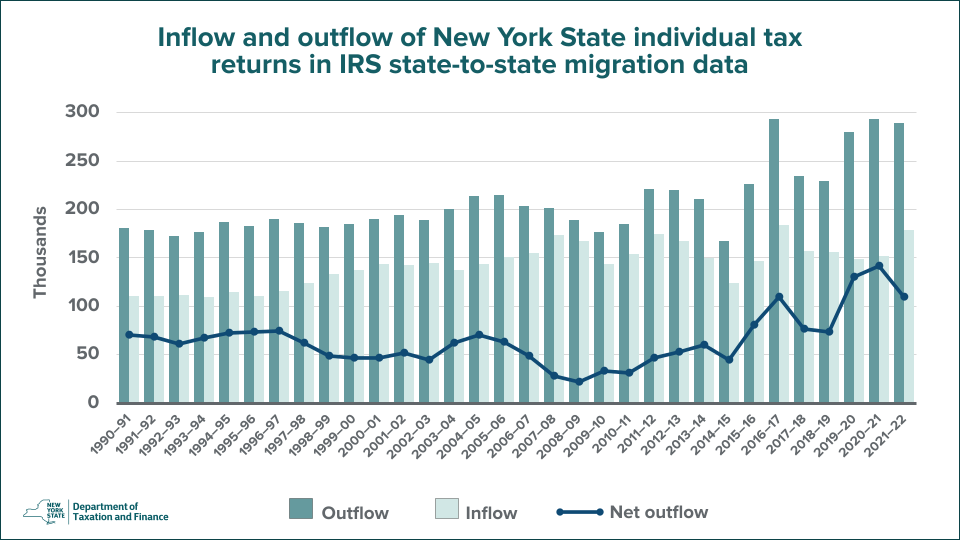
This bar and line chart shows the inflow and outflow of New York State individual tax returns in the IRS state-to-state migration data from 1990-1991 through 2022-2023. The bars show the number of returns the IRS reports from filers moving out of New York and into New York, and the line shows the net number moving out of the state.
Inflow and outflow of New York State individual tax returns in IRS state-to-state migration data
View this data as a table
| Calendar years | Outflow in thousands of returns | Inflow in thousands of returns | Net outflow in thousands of returns |
|---|---|---|---|
| 1990–91 | 181 | 111 | 70 |
| 1991–92 | 179 | 110 | 68 |
| 1992–93 | 173 | 112 | 61 |
| 1993–94 | 177 | 109 | 67 |
| 1994–95 | 187 | 115 | 72 |
| 1995–96 | 183 | 110 | 73 |
| 1996–97 | 190 | 116 | 74 |
| 1997–98 | 186 | 124 | 62 |
| 1998–99 | 182 | 133 | 49 |
| 1999–00 | 185 | 138 | 47 |
| 2000–01 | 190 | 144 | 46 |
| 2001–02 | 194 | 143 | 51 |
| 2002–03 | 189 | 145 | 45 |
| 2003–04 | 200 | 138 | 62 |
| 2004–05 | 214 | 144 | 70 |
| 2005–06 | 215 | 151 | 63 |
| 2006–07 | 204 | 156 | 48 |
| 2007–08 | 202 | 173 | 28 |
| 2008–09 | 189 | 167 | 22 |
| 2009–10 | 177 | 144 | 33 |
| 2010–11 | 185 | 154 | 31 |
| 2011–12 | 221 | 175 | 46 |
| 2012–13 | 220 | 167 | 52 |
| 2013–14 | 211 | 150 | 60 |
| 2014–15 | 168 | 124 | 44 |
| 2015–16 | 227 | 146 | 80 |
| 2016–17 | 293 | 184 | 110 |
| 2017–18 | 234 | 157 | 77 |
| 2018–19 | 230 | 156 | 74 |
| 2019–20 | 280 | 149 | 131 |
| 2020–21 | 294 | 152 | 142 |
| 2021–22 | 289 | 179 | 110 |
| 2022–23 | 273 | 197 | 76 |
The 2022–2023 net outflow of 74,482 returns is concentrated in people between the ages of 26 and 44 as in prior years. However, the number is smaller than last year, and there is evidence of younger people with higher incomes coming into New York.
| Federal adjusted gross income (AGI) | All ages | Under 26 | 26–34 | 35–44 | 45–54 | 55–64 | 65 and over |
|---|---|---|---|---|---|---|---|
| All AGI | -74,482 | 7,920 | -20,613 | -23,076 | -12,593 | -12,635 | -13,485 |
| $1 under $10,000 | -5,007 | -13 | -1,502 | -1,172 | -612 | -661 | -1,047 |
| $10,000 under $25,000 | -12,964 | -1,014 | -4,221 | -3,247 | -1,711 | -1,223 | -1,548 |
| $25,000 under $50,000 | -17,338 | 221 | -6,004 | -4,838 | -2,769 | -1,997 | -1,951 |
| $50,000 under $75,000 | -8,908 | 3,463 | -3,703 | -3,409 | -1,787 | -1,814 | -1,658 |
| $75,000 under $100,000 | -6,857 | 1,978 | -2,231 | -2,441 | -1,277 | -1,403 | -1,483 |
| $100,000 under $200,000 | -12,910 | 2,687 | -1,916 | -4,622 | -2,501 | -3,120 | -3,438 |
| $200,000 or more | -10,498 | 598 | -1,036 | -3,347 | -1,936 | -2,417 | -2,360 |
The outflow of primary taxpayers in the 2022–2023 data is noticeably less than in the prior periods.
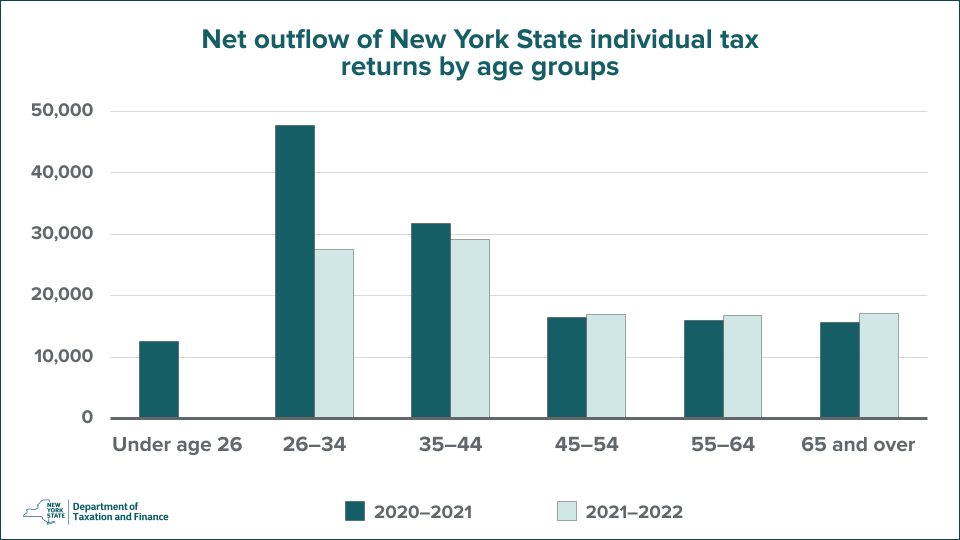
This bar chart shows the net outflow of New York State individual tax returns by age group for three periods, 2020-2021, 2021-2022, and 2022-2023.
Net Outflow of New York State Individual Tax Returns by Age Groups
View this data as a table
| Years | Under age 26 | 26–34 | 35–44 | 45–54 | 55–64 | Over 65 |
|---|---|---|---|---|---|---|
| 2020–2021 | 12,544 | 47,752 | 31,781 | 16,482 | 16,027 | 15,660 |
| 2021–2022 | 187 | 27,584 | 29,221 | 16,905 | 16,773 | 17,128 |
| 2022–2023 | (7,920) | 20,613 | 23,076 | 12,593 | 12,635 | 13,485 |
New Yorkers head towards warmer, neighboring, and less expensive states
The following map uses the 2022–2023 IRS data to highlight the states to which New Yorkers go and the areas from which New Yorkers come.
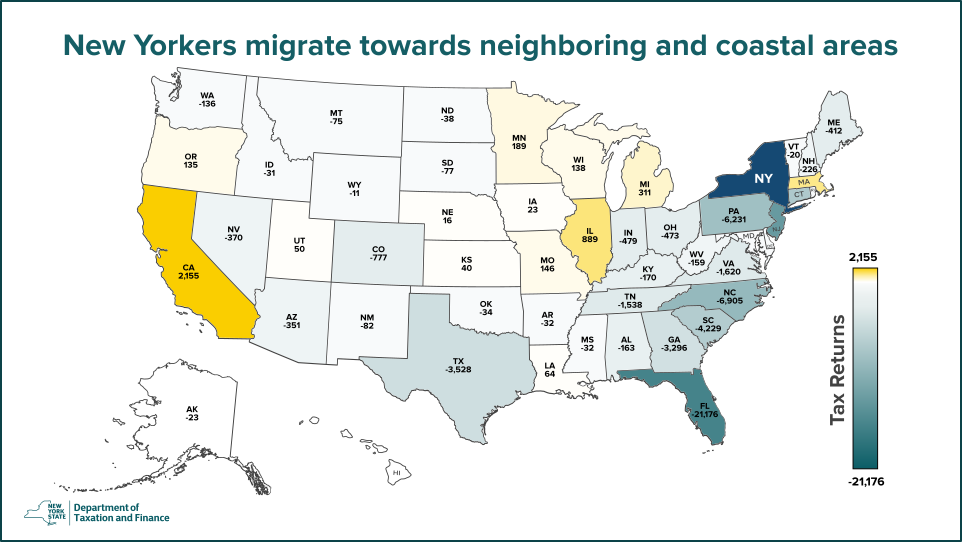
This map shows the net outflow from New York State individual tax returns to each state in the U.S.
New Yorkers migrate towards warmer, neighboring, and less expensive states
View this data as a table
| State | Net flow of individual tax returns |
|---|---|
| Alabama | -163 |
| Alaska | -23 |
| Arizona | -351 |
| Arkansas | -32 |
| California | 2,155 |
| Colorado | -777 |
| Connecticut | -5,049 |
| Delaware | -960 |
| District Of Columbia | 176 |
| Florida | -21,176 |
| Foreign | -4,000 |
| Georgia | -3,296 |
| Hawaii | -142 |
| Idaho | -31 |
| Illinois | 889 |
| Indiana | -479 |
| Iowa | 23 |
| Kansas | 40 |
| Kentucky | -170 |
| Louisiana | 64 |
| Maine | -412 |
| Maryland | -850 |
| Massachusetts | 548 |
| Michigan | 311 |
| Minnesota | 189 |
| Mississippi | -32 |
| Missouri | 146 |
| Montana | -75 |
| Nebraska | 16 |
| Nevada | -370 |
| New Hampshire | -226 |
| New Jersey | -16,906 |
| New Mexico | -82 |
| North Carolina | -6,905 |
| North Dakota | -38 |
| Ohio | -473 |
| Oklahoma | -34 |
| Oregon | 135 |
| Pennsylvania | -6,231 |
| Rhode Island | -266 |
| South Carolina | -4,229 |
| South Dakota | -77 |
| Tennessee | -1,538 |
| Texas | -3,528 |
| Utah | 50 |
| Vermont | -20 |
| Virginia | -1,620 |
| Washington | -136 |
| West Virginia | -159 |
| Wisconsin | 138 |
| Wyoming | -11 |
| New York |
Even the states with the largest net outflow on the map also have people moving into New York. The chart uses the 2022–2023 IRS data.
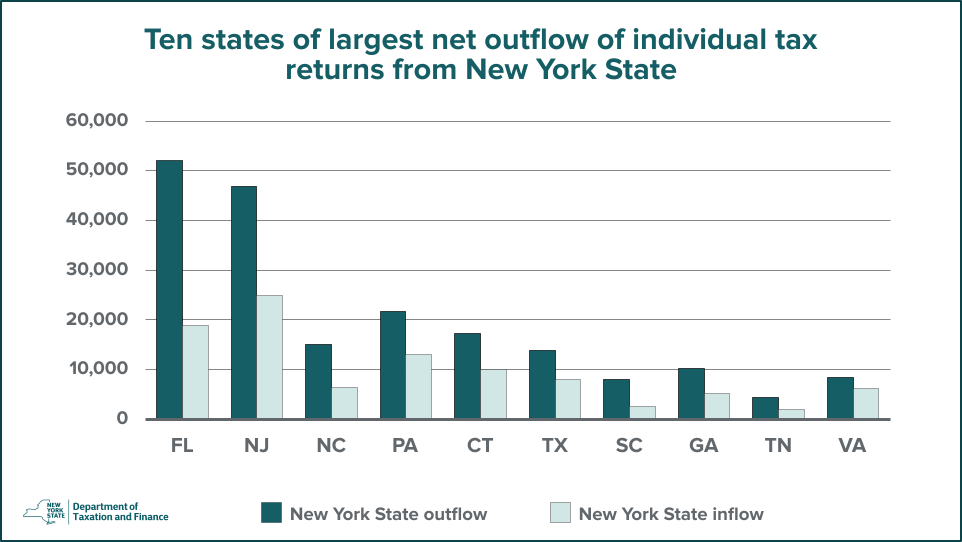
This bar chart shows the ten states with the largest net outflow of New York State individual tax returns as well as the inflow from that state to New York.
Ten states of largest net outflow of individual tax returns from New York State
View this data as a table
| State | New York State outflow | New York State inflow | Net outflow of individual returns |
|---|---|---|---|
| Florida | 43,187 | 22,011 | 21,176 |
| New Jersey | 43,699 | 26,793 | 16,906 |
| North Carolina | 13,811 | 6,906 | 6,905 |
| Pennsylvania | 20,643 | 14,412 | 6,231 |
| Connecticut | 15,535 | 10,486 | 5,049 |
| South Carolina | 7,266 | 3,037 | 4,229 |
| Texas | 12,961 | 9,433 | 3,528 |
| Georgia | 9,138 | 5,842 | 3,296 |
| Virginia | 8,124 | 6,504 | 1,620 |
| Tennessee | 3,817 | 2,279 | 1,538 |